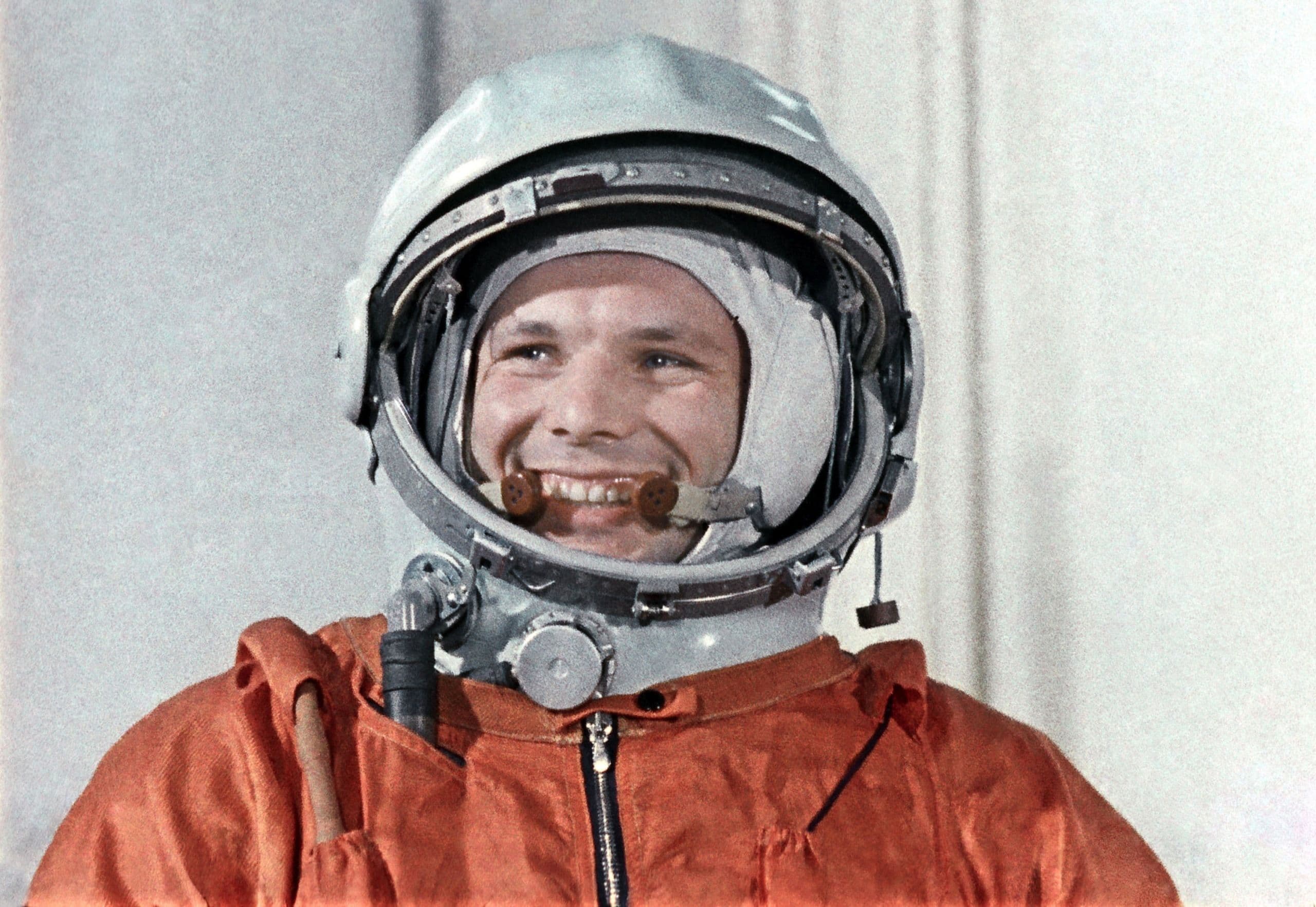
Yuri Gagarin remains a towering figure in the history of human space exploration. On April 12, 1961, the then-27-year-old Soviet Air Force pilot embarked on a journey that would mark one of humankind’s most extraordinary achievements: becoming the first person to orbit Earth. In just 108 minutes, Gagarin’s spacecraft, Vostok 1, soared beyond our planet’s familiar horizons, circled once around the globe, and safely brought its lone passenger back. This single flight not only altered the course of the Cold War but also galvanized the entire world’s sense of possibility regarding what humans could accomplish beyond Earth’s bounds.
Gagarin’s early life was as humble as they come. Born on March 9, 1934, in the small village of Klushino, Russia, he grew up in a family of modest means. World War II cast a long shadow over his childhood, as the village was occupied by German forces. Nevertheless, Gagarin was determined to achieve something greater. Drawn to flying from a young age, he pursued aviation through a local “young pilots” club, and his enthusiasm ultimately led to enrollment at the Orenburg Pilot School. His talent and discipline caught the eye of his instructors, and following his graduation, he served as a military pilot. When the Soviet Union announced that it was searching for cosmonauts—particularly individuals from aviation backgrounds—Gagarin’s name shot to the top of the candidate list. By the late 1950s, he had entered an elite training program that pushed the boundaries of human endurance.
The mission that catapulted Gagarin to global fame was an audacious one. At the time, the space race between the United States and the Soviet Union was in full swing, with both nations pouring resources into rocket technology to gain strategic and symbolic advantages. The Soviets, having already sent Sputnik 1 into orbit in 1957, were determined to put a human into space before America could. The Vostok program emerged from this competition, culminating in Gagarin’s successful journey. From cramped cockpit conditions to the possibility of harsh reentry forces, the mission tested both pilot and machine like never before. When Gagarin famously radioed “Poyekhali!” (“Let’s go!”) at launch, he was expressing both personal excitement and the pioneering spirit of an entire nation—perhaps even the whole world.
In the decades since, Gagarin’s feat has continued to inspire explorers, engineers, and dreamers. Countless monuments, streets, and academic institutions bear his name, serving as reminders of how a single person’s bravery can spark a global movement. Schools around the world teach children about “Cosmonautics Day” (observed on April 12), passing along the sense of wonder and daring that Gagarin embodied. Even after his untimely death in a training flight accident in 1968, his legacy remains undiminished. He is remembered not merely as a Soviet icon but as a symbol of humankind’s unquenchable thirst for exploration.
The story behind Gagarin’s mission and its social, political, and human dimensions are vividly explored in Stephen Walker’s acclaimed book, Beyond: The Astonishing Story of the First Human to Leave Our Planet and Journey into Space. Walker delves deeply into the historical tapestry of the early 1960s, highlighting how the Soviet program’s secrecy both protected and endangered its first cosmonauts. He also sheds light on the lesser-known personal challenges Gagarin faced—how he coped with the immense pressure, and the moral weight of representing a nation on the global stage. Through meticulous research, Walker illuminates the frantic efforts of designers, engineers, and government officials who worked under extreme deadlines, sometimes risking catastrophic failure. And yet, despite these risks, they achieved a technical and symbolic coup of epic proportions.
One of the most engaging aspects of Walker’s narrative is his balanced portrayal of the political tensions framing the flight. While the Soviet Union painted Gagarin’s success as a triumph of communism, the Americans were forced to grapple with their own sense of urgency about catching up. The book also underscores how Gagarin’s beaming smile and warm personality made him a cultural ambassador, disarming world leaders and everyday citizens alike. Walker sifts through declassified documents, personal interviews, and previously unavailable records to craft a comprehensive account that not only honors the heroism of Gagarin but also examines the behind-the-scenes competition fueling the space race.
Today, as space agencies and private companies plan missions to the Moon, Mars, and beyond, Gagarin’s 108-minute flight continues to resonate. His successful mission proved that humans could reach the edge of space—and return—ushering in a new era of technological progress and international collaboration. Stephen Walker’s Beyond reminds us that for all the high-level politics and scientific marvels, spaceflight is ultimately a profoundly human endeavor, one that unites our aspirations and courage under a shared banner of exploration.
Yuri Gagarin’s pioneering step off the launchpad at Baikonur Cosmodrome remains a testament to the incredible fusion of vision, ingenuity, and bravery. Reading about his life and mission—particularly through Walker’s well-researched account—offers invaluable insights into the kind of determination it takes to go beyond what we think is possible. Whether you’re a historian, a technology enthusiast, or simply someone who loves a stirring real-life adventure, Gagarin’s story invites us all to look skyward and imagine new frontiers. As we craft the future of space travel, may we remember the young pilot who led the way—and the gripping stories that keep his memory alive.